
نظام صوت للفنادق البوتيك، بلا معدات ظاهرة.
أجنحة، صالات سبا، وصالات طعام يخرج فيها الصوت من العمارة نفسها. لا شبكات، لا تنازلات عن لغة تصميم المنشأة.
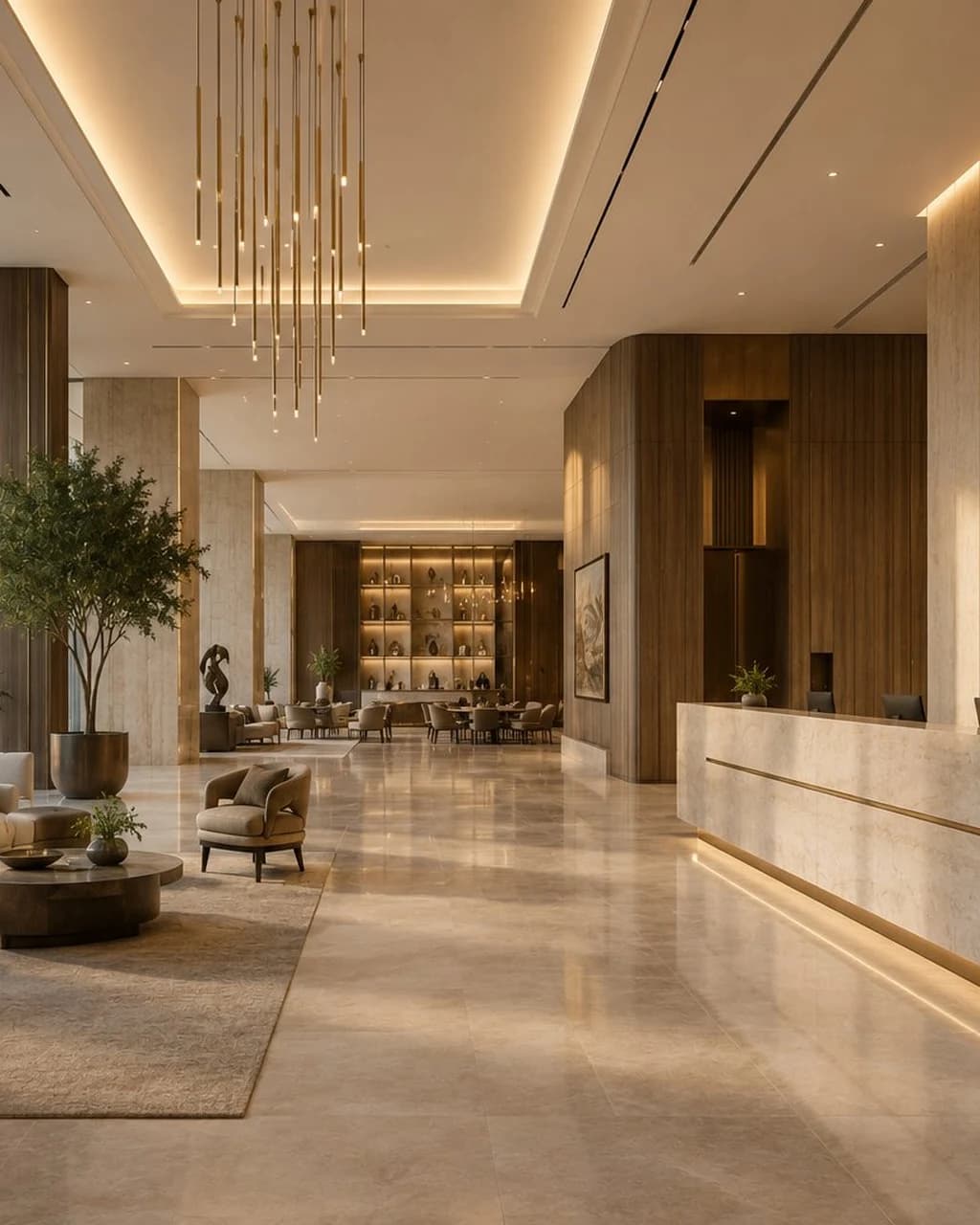
الفندق الفاخر الهادئ لا يحتمل تقنية ظاهرة.
أفضل الغرف في أفضل المنشآت تتشارك خاصية واحدة: لا شيء على الحائط يقطع التصميم. حتى وقت قريب كان هذا المعيار في تضاد مع طلب الصوت. نظام صوت الفندق كان يُصمَّم حول معدات مرئية: سمّاعات سقفية، شبكات داخل الأعمال الخشبية، مضخّمات مخفية خلف نسيج صوتي لا يريد أي مدير رؤيته. الصوت المعماري يزيل الجسم من المعادلة. السطح يصبح المصدر، والغرفة تظل ما هي.
الأجنحة والغرف المتميّزة.
الأجنحة هي الموضع الذي يقرّر فيه الضيف إن كان الفندق قد استحقّ تصنيفه. كل سمّاعة ظاهرة في جناح هي حجّة صغيرة ضد سعر الليلة. نظام صوت مدمَج في الجصّ، أو خشب القشرة، أو الألواح المكسوّة يترك الجناح يُقرَأ كتصميم سكني لا كمنتج فندقي. الموسيقى تصل، موزَّعة وليست موجَّهة، بمستوى يناسب المكان. غياب العتاد يصبح جزءاً من التجربة.
- تحكّم بالمنطقة مدمج مع نظام إدارة غرف النزلاء
- لا سمّاعات في السقف، لا شبكات في الحائط، لا شرائط صوت على الأسرّة
- تغطية متساوية في الحمّامات وغرف الملابس ومناطق الجلوس
- متوافق مع البث الشخصي في الغرفة وبرمجة أجواء التيرن-داون
السبا والعافية وغرف العلاج.
العافية الصوتية باتت من أبرز اتجاهات تصميم السبا الفاخر — رصدها معهد Global Wellness Institute ضمن أولويات 2026 لإعادة تأهيل المنشآت. غرف العلاج تحتاج صوتاً يصل من غير موضع محدَّد: لا حزمة اتجاهية فوق السرير، لا صندوق مرئي يشتّت انتباه الضيف من التجربة إلى الأثاث. الصوت المعماري يلائم انضباط تصميم السبا لأنه يذوب في التشطيبات نفسها التي اختيرت لملمسها وهدوئها البصري.
- غرف علاج بلا طبقة صوتية مرئية
- صالات استرخاء بأسطح ناطقة من الحجر أو الجصّ
- إعدادات متوافقة مع الحمّامات ومناطق الرطوبة
- العزل الصوتي بين الغرف المتجاورة محفوظ
مطاعم التوقيع وصالات الشيف.
مطعم التوقيع مكان اختير فيه كل تفصيل — وأي سمّاعة ظاهرة تُقرَأ فيه كخطأ. تصميم صوت مطاعم فاخرة يُحدَّد كجزء من السطح المعماري يسمح بتشكيل الطابع الصوتي للقاعة دون قطع لوحة المواد. في اللاونج والبار، البثّ الموزَّع يتجنّب "أثر النفق" الذي تحدثه مصفوفات السقف في القاعات الضيقة. الصوت يصبح أجواء، لا بنية تحتية.
ما يسأل عنه فريق التشغيل.
تصميم صوت الضيافة يُحكم عليه من فريق العمليات، لا من المصمّم. ثلاثة أسئلة تأتي أوّلاً: الطاقة، الصيانة، التحكّم. الصوت المعماري يستهلك عشرات الواطات لكل منطقة لا مئاتها. معالجة السطح خاملة ولا تحتاج خدمة مجدولة بعد التركيب. التحكّم بالمنطقة يتكامل مع منصّة إدارة المبنى نفسها التي تدير الإضاءة والمناخ. التدخّل غير مرئي في التشغيل أيضاً.
فندق بوتيك خمس نجوم، سوق الشرق الأوسط، إعادة تأهيل 2023.
- Brief
- طلبت الملكية إعادة تنفيذ الصوت في ثماني أجنحة، ولاونج اللوبي، وسبا التوقيع، دون تغيير لوحة المواد التي حدَّدها المهندس الداخلي. لا سمّاعات ظاهرة مسموحة في أي منطقة يشاهدها الضيف.
- Solution
- لواصق صوت معماري على أسقف الجصّ في الأجنحة، وعلى واجهات نسيجية في لاونج اللوبي، وعلى ألواح حجرية معالجة في صالة استرخاء السبا. التضخيم في ممرّ خدمات. تقسيم المناطق مدمج مع منصّة إدارة غرف النزلاء.
- Outcome
- سُلِّمت النية التصميمية الأصلية بلا أي عتاد صوتي مرئي في مناطق الضيوف. لم تُسجَّل شكاوى صوتية من النزلاء خلال أول اثني عشر شهراً.
المعرّفات محفوظة بموجب بند السرية. التحقّق متاح بموجب اتفاقية عدم إفشاء عند الطلب.
كم يكلّف مشروع ضيافة — بشرائح، لا بعروض أسعار.
الحقيقة التجارية لنظام صوت معماري أن نطاق العمل والتشطيبات والتكامل تؤثر أكثر من التقنية نفسها. ما يلي شرائح نوعية. إن كان لديكم موجز محدَّد، يعيد النموذج المؤهَّل تقديراً محدَّد النطاق خلال يوم عمل واحد.
تختلف القيمة حسب التشطيبات وحجم الغرفة وتكامل نظام إدارة المبنى.
غرفة علاج، صالة استرخاء أو حمّام يُسعَّرون حسب السطح والتحكم.
يُحدَّد وفق عدد الغرف والمطاعم والدعم الخلفي.
المقارنة مع مواصفة صوت تقليدية
| Traditional AV | Architectural Audio | |
|---|---|---|
| العتاد الظاهر في مناطق النزلاء | سمّاعات سقف، شبكات جدار، صناديق مضخّم | لا شيء. السطح هو المصدر. |
| الطاقة المستهلَكة لكل منطقة | مئات الواطات، تبريد نشط | عشرات الواطات، تضخيم رفّ قياسي |
| الصيانة بعد التركيب | تنظيف شبكات، استبدال مشغّلات، انحراف معايرة | سطح خامل. المضخّم صيانة رفّ قياسية. |
| الأثر على التصميم الداخلي | التصميم يجب أن يتكيّف مع عناصر صوت ظاهرة | لغة التصميم تبقى سليمة. المقاولون ينسّقون على التشطيبات. |
| تكامل نظام إدارة المبنى | يُضاف لاحقاً، غالباً مخصَّص لكل منشأة | تحكم بالمنطقة مصمَّم للتكامل مع منصّة إدارة غرف النزلاء |
هذه شرائح نوعية. كل مشروع ضيافة يُحدَّد نطاقه فردياً. استخدم النموذج أدناه مع عدد الغرف والتوقيت وشريحة الميزانية — تقدير محدَّد النطاق يصلك خلال يوم عمل واحد.
تصميم الصوت للضيافة الفاخرة — موجز العمل لعام 2026
الفنادق البوتيك، وإعادة تأهيل الخمس نجوم، والفنادق الموجَّهة نحو العافية تجاوزت السمّاعات المخفية في السقوف. ماذا يطلب موجز الصوت في الضيافة الآن — وكيف تجيب الفئة التي نسمّيها الصوت المعماري، غرفة بعد غرفة.
دليل المصمّم للصوت غير المرئي في العمارة المعاصرة
ماذا يُكتَب في المواصفة، متى ننسّق مع أي مقاول، ماذا تقدّم HST مقابل ما يملكه المقاولون المحلّيون، وقائمة عمل للمصمّم الذي يُدخل الفئة إلى مشروع نشط.
الصوت المعماري: الفئة التي لم توجد بعد
عند تقاطع علم الصوتيات والعمارة، تتشكّل ممارسة جديدة لا تخفي مكبّرات الصوت بل تستغني عنها. هذا شرح لما هي، وأين تنتمي، وماذا تتطلّب في مرحلة التصميم.
لمطوّري الضيافة ومديري العمليات